Commercial Carpet vs. Carpet Tiles: What’s Better?
Commercial carpet and carpet tiles may look similar, but they have distinct characteristics, advantages, and features that make them better suited to different business spaces. Learn about the differences between commercial carpet versus carpet tiles and what to consider before deciding on your next flooring installation.
Understanding the Difference Between Commercial Carpet and Carpet Tiles
Commercial carpet is heavy-duty flooring designed for businesses and other public spaces. This traditional broadloom carpet is sold in large rolls and is frequently used for wall-to-wall carpeting.
In comparison, commercial carpet tiles are modular, pre-cut squares that fit together with a built-in underlay. They adhere to the floor beneath or to each other, depending on the product.
Advantages of Commercial Carpet
Commercial carpet is a versatile and durable option for numerous offices, retail spaces, and other businesses in Southern California’s Gateway Cities region. Available in a wide variety of colors, patterns, and textures, they are made with tightly woven fibers that resist damage from rolling carts, heavy foot traffic, or other wear and tear. Additionally, commercial carpet reduces the risk of slips and falls, provides underfoot cushioning, and absorbs sound to minimize distractions in busy offices or other establishments.
Advantages of Carpet Tiles
Carpet tile flooring carries many of the same advantages as wall-to-wall commercial carpet, including durability in high-traffic environments, aesthetic versatility, improved safety, and enhanced comfort. The modular design of carpet tiles also means you can easily replace stained, damaged, or worn-out sections rather than the entire floor.
Commercial Carpet vs. Carpet Tiles: Side-by-Side Comparison
There are several differences to consider between carpet tiles versus broadloom carpet. Review this commercial flooring comparison to understand how they may suit different businesses.
Durability
Both broadloom carpet and carpet tiles are durable commercial flooring options. Broadloom carpet is made from dense, low-pile, and commercial-grade fibers that can withstand heavy use, and the seamless construction prevents edges from lifting. Once it’s damaged or unevenly worn, however, the entire space may require replacement carpet.
Carpet tiles are similarly constructed for durability but have seams and edges that are prone to lifting. Easy replacement for damaged tiles helps extend the lifespan of the entire floor.
Maintenance
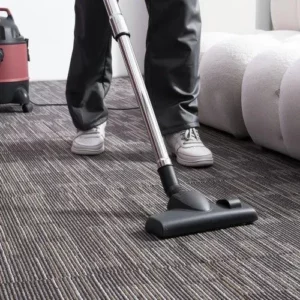
Maintenance for commercial carpet includes regular vacuuming, careful treatment of spills and stains, and periodic deep carpet cleaning throughout the entire floor. Carpet tiles also require consistent vacuuming, but are generally a low-maintenance commercial flooring option, and you can easily uninstall tiles for spot treatments or deep cleaning.
Installation
Commercial carpet installation requires professional skill, heavy-duty stretching equipment, and underlayment work, and fitting it to the room can create significant material waste. Carpet tiles are faster to install because they come with built-in padding and adhesive.
Repairability
Modular design makes repairs to carpet tiles significantly easier than to wall-to-wall carpet. You can easily remove and replace damaged carpet tiles without specialized tools or skills, but broadloom carpet repair requires more precision and expertise to cut out damaged areas and patch them seamlessly.
Design Flexibility
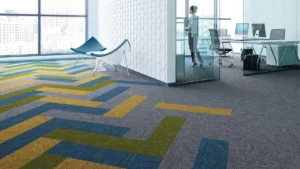
Broadloom carpet has historically had a greater variety of styles, patterns, and other design features, but the increased popularity of carpet tiles has largely reduced this gap. Carpet tiles can also be mixed and matched in different shapes, colors, and patterns to create unique designs.
Long-term Cost
Traditional rolled carpet has lower upfront costs, but more intensive installation labor and complex repair needs can add to long-term expenses. It may also require more frequent replacement than carpet tiles, especially for uneven wear. Carpet tiles are more expensive initially, but lower maintenance costs and extended longevity improve their long-term value.
Best Applications
Seamless construction and a greater selection of luxurious weaves make broadloom carpet ideal for high-end or prestigious environments, such as hotel lobbies and boardrooms, as well as for executive office carpet flooring. Carpet tiles are best as flooring for modern office buildings and retail spaces with heavy foot traffic.
Best Flooring Choice by Business Type
Choosing between commercial carpet and carpet tiles depends on the business type and its operational needs.
Office Buildings
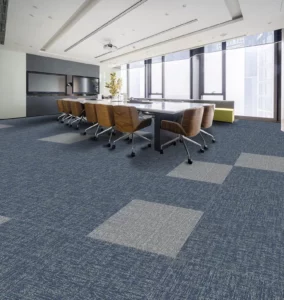
Carpet tiles are a common choice for modern offices with open-concept layouts in the Commerce area. They provide acoustic dampening in open workspaces and allow for easy spot cleaning or replacement for coffee spills, rolling office chairs, and other wear.
Retail Stores
In retail stores, carpet tiles can withstand heavy foot traffic and are easy to replace as needed. Broadloom commercial carpet offers a seamless, plush appearance that works well for luxury boutiques, while modular carpet tiles can create defined shopping zones and guide customer traffic in department stores and similar retail environments.
Medical Offices
Carpet tiles are an industry-standard choice in medical offices for their longevity and overall value. Modular tiles can be replaced quickly if stained by biohazards or chemicals, preventing disruption to the office.
Educational Facilities
In educational facilities, carpet tiles absorb sound to minimize classroom distractions, and mixing and matching tiles can create different zones or pathways.
Hospitality & Hotels
Commercial wall-to-wall carpet is common in hospitality establishments, which usually emphasize luxury and comfort. Carpet tiles are better suited to hospitality environments with high traffic or spill risks, such as dining areas or lobbies.
Factors to Consider Before Choosing
Consider the characteristics of different commercial carpet options and how they work with your business:
- Traffic: Businesses with heavy foot traffic or moving equipment require damage-resistant flooring.
- Maintenance: Areas prone to spills and dirt may benefit more from high-durability flooring, while luxury spaces may balance higher maintenance with more plush carpets.
- Safety and comfort: Choose surfaces that support customer and staff safety and comfort, with attention to acoustic dampening, slip resistance, and underfoot cushioning.
- Aesthetics: Flooring should match the business’s brand image and identity.
- Budget: Keep upfront installation costs and long-term value in mind.
Commercial Flooring Trends for 2026
Several carpet for commercial building trends are gaining popularity in 2026, including:
- Earth-toned palettes
- Mixed format and geometric layouts
- Sustainable flooring materials
- Subtle pattern transitions
Find Commercial Carpet Solutions at Hernandez Wholesale Flooring
Explore the best commercial carpet solutions for your business today with Hernandez Wholesale Flooring. Contact us to schedule an in-person assessment and start planning your next flooring upgrade.

About the Author
Since 1995 Steven Hernandez has been at the heart of Hernandez Wholesale Flooring, helping build the family-owned business alongside his parents and siblings from the ground up. Today, as Vice President, he continues to lead with the same passion, integrity, and dedication that have been the foundation of the company for decades. Turning a family dream into a trusted local business.
With a deep love for the flooring industry, Steven takes pride in providing customers with quality products, expert guidance, and personalized service. His enthusiasm is evident in every project—whether it’s helping a local family transform their home or working on commercial projects for larger clients. For him, flooring is more than a business—it’s a craft and a calling.